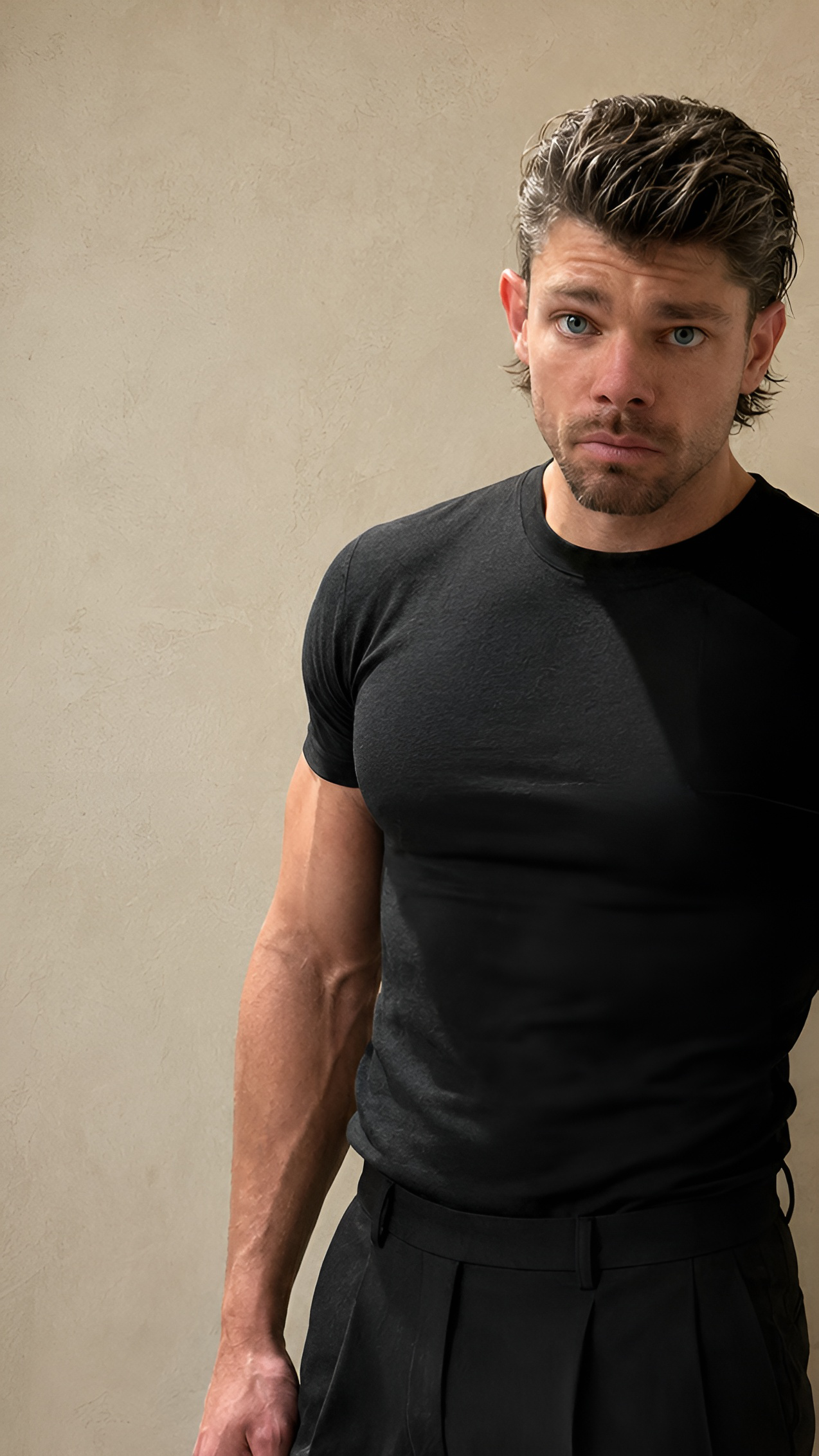
Long before Brent Lee began designing interiors and furniture, those around him assumed architecture would be his inevitable direction. Growing up in Australia, he was rarely without a sketchbook and spent much of his childhood constructing objects from scrap timber and reclaimed nails. Teachers and grandparents saw the early signs of an architect, although Lee himself was drawn first towards another discipline entirely.
Fashion offered an intimacy he felt architecture could not fully provide. Its relationship to the body, movement and confidence fascinated him, as did the social language clothing could create. It was also a field in which artistic direction could take precedence, temporarily freed from the technical and practical demands that govern buildings. Lee studied fashion design in Melbourne, where a lecturer praised the strength of his ideas, even as his approach to making remained closer to that of a builder than a dressmaker. He understood form through construction, volume and structure; the hammer and nail came more naturally than the needle and thread.
Returning to Sydney, Lee began studying architecture, gaining a deeper understanding of proportion, planning and the relationship between built form and human movement. Yet it was within interiors that the instincts developed through both fashion and architecture became fully legible. Interiors allowed structure to coexist with intimacy, and permanence with atmosphere. They could choreograph movement through space while also shaping emotion, identity and the way a person experiences their surroundings.
Merry-Joseph Blondel, The Sun, or the Fall of Icarus (1819), in the Rotunda of Apollo at the Louvre Museum in Paris, photographed by Brent Lee and reflecting his love of introducing fresco into residential interiors
While studying, Lee began publishing conceptual interiors online. The images circulated internationally, attracting an audience and, soon after, commissions from clients beyond Australia. What began as speculative work moved quickly into professional practice, with Lee developing residences through a highly visual language of architectural proportion, expressive materiality and carefully controlled atmosphere.
A general electrical plan for Studio Brent Lee’s first Los Angeles project, stapled to the exposed timber framing on site, 2022
Furniture followed as an extension of those interiors. Lee began designing individual pieces for specific spaces and clients when the objects available could not achieve the required scale, silhouette or relationship to the architecture. Like clothing, these works maintained a direct connection to the body; like architecture, they relied on structure, proportion and material discipline.
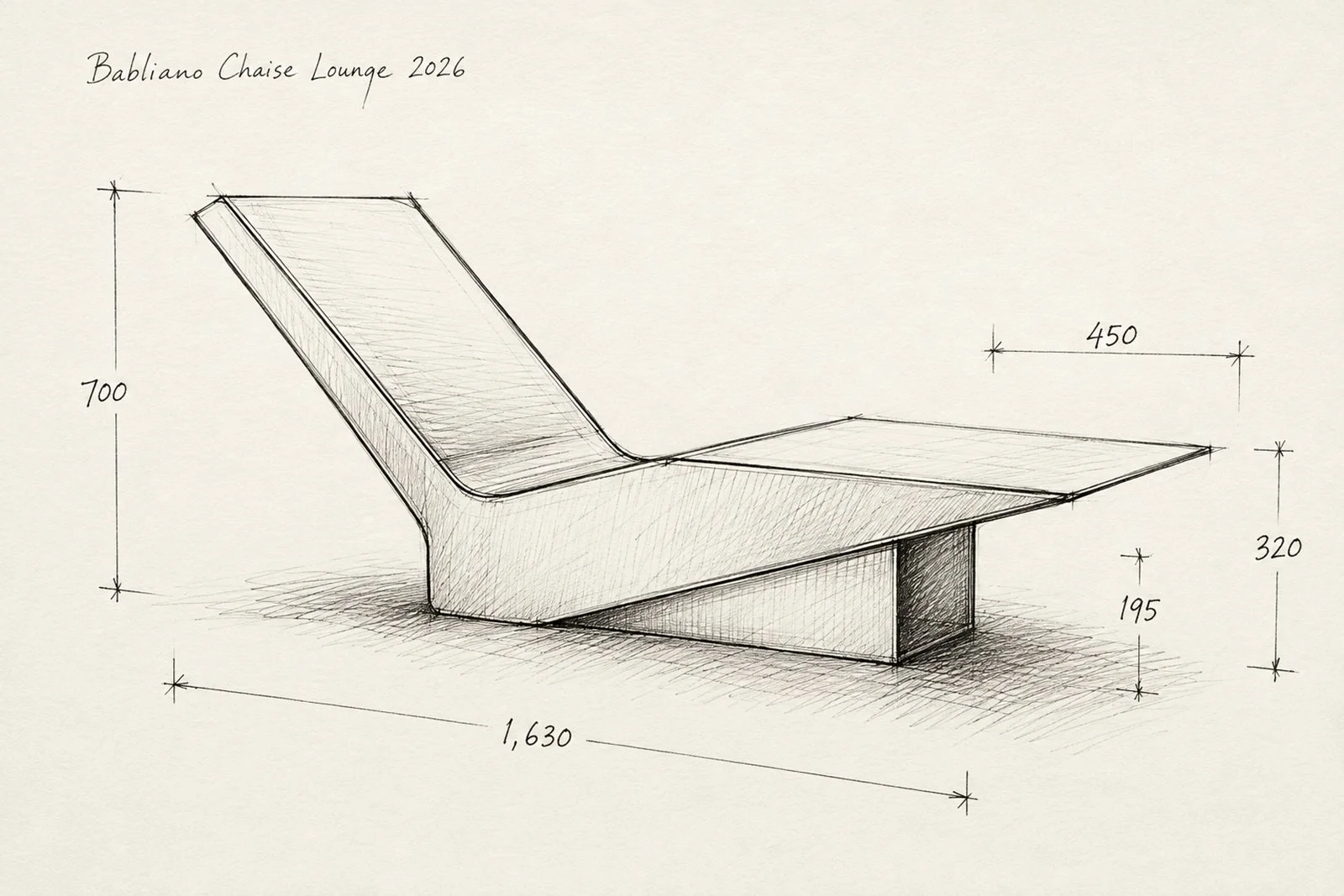
Over time, those individual commissions developed into a language of their own. Babliano, Lee’s debut collection, marked the point at which the furniture stepped beyond the interiors that had first prompted it. The works retain fashion’s awareness of the body and architecture’s command of structure and proportion, but no longer depend on a particular room to explain them.
For Lee, interiors and furniture have never represented a compromise between two early ambitions. They became the most complete expression of both: architecture’s command of space and fashion’s intimate understanding of movement, identity and form.
One of the final sketches for the Babliano Chaise Lounge, completed before the design moved into CAD modelling and technical documentation