Palm Beach
Sydney, Australia
2024 — Ongoing
Residential
Perched on a cliff overlooking the sweeping coastline of Sydney's Palm Beach, this private residence is conceived around an unusually privileged relationship with the landscape. Its northeast orientation captures the changing Australian daylight, while uninterrupted views across the Pacific establish a constant presence throughout the house. A complete demolition and rebuild, with architecture by a residential-focused Sydney-based firm, plus interiors and exterior design by Brent Lee, the project brings together the relaxed sensibility of coastal resort living with a more considered language of historical European architecture.
Inside, the references are deliberately removed from the conventions of contemporary beach-house design. Tall arched openings, aged timber parquet and softly textured plaster introduce a sense of architectural permanence, their classical associations tempered by restrained detailing and a predominantly pale material palette. Rather than recreating a historical interior, these elements provide a familiar architectural framework through which the extraordinary coastal setting can be experienced.
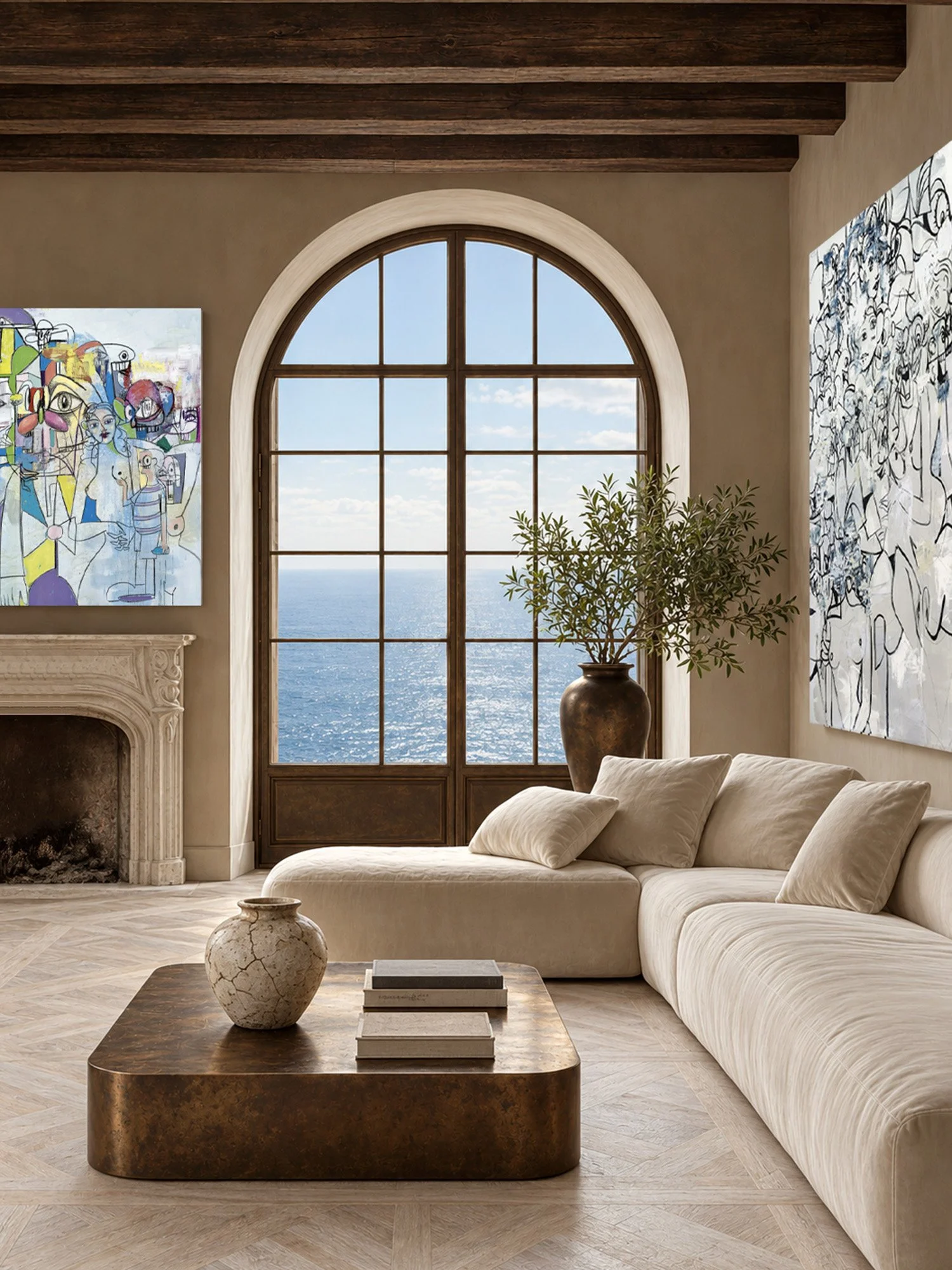
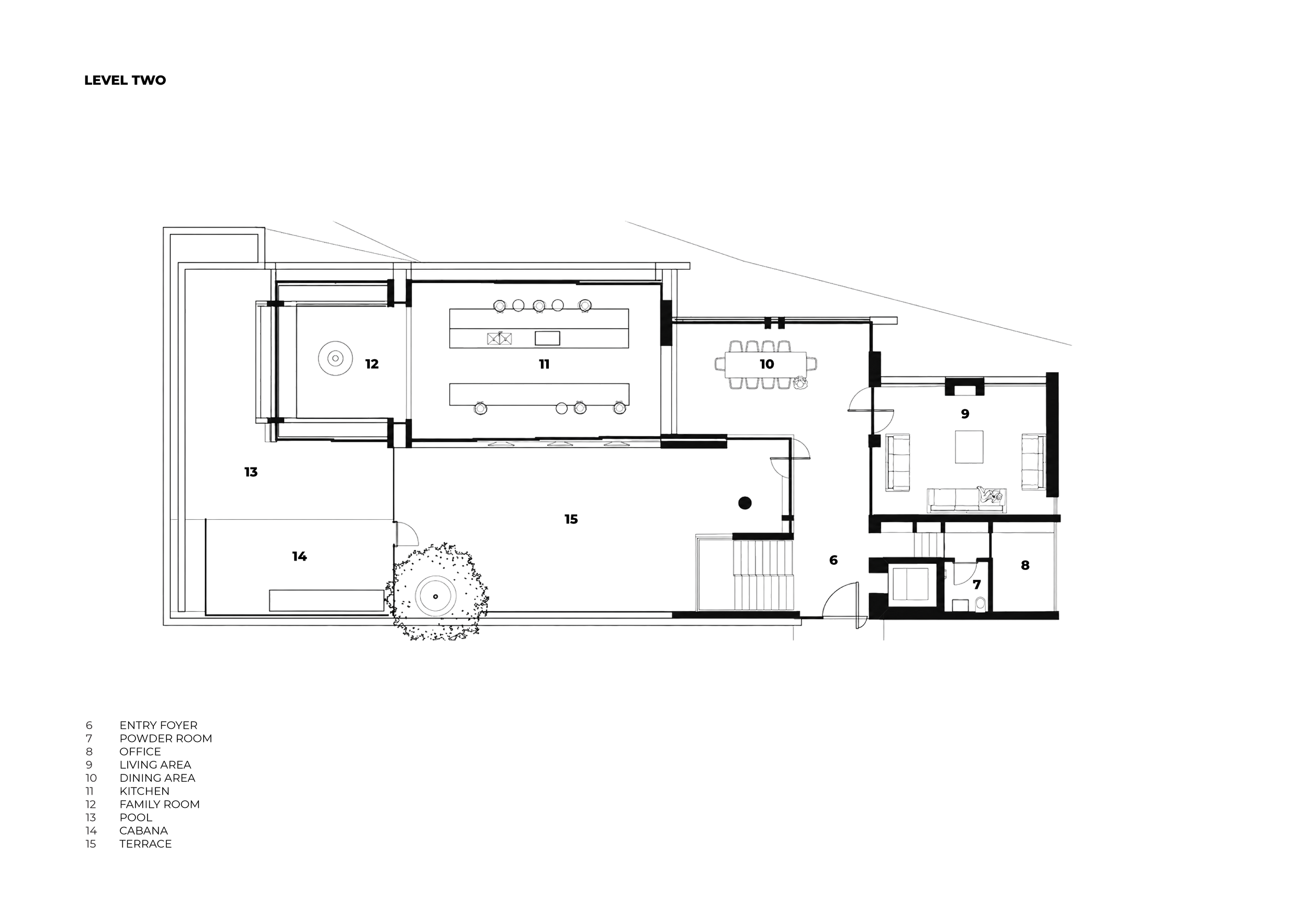
The principal living room is particularly expressive of this relationship. Dark timber ceiling beams introduce a strong horizontal rhythm, contrasting with the pale plaster walls and an elaborately carved stone fireplace. Beyond a monumental arched window, the uninterrupted expanse of ocean becomes almost another architectural element. George Condo paintings introduce a different energy altogether, their expressive gestures and vivid colors challenging the formality of the surrounding architecture. Below, a generously proportioned linen sofa and substantial bronze-toned coffee table establish a more intimate domestic setting, allowing the room's considerable visual character to coexist with a sense of ease.
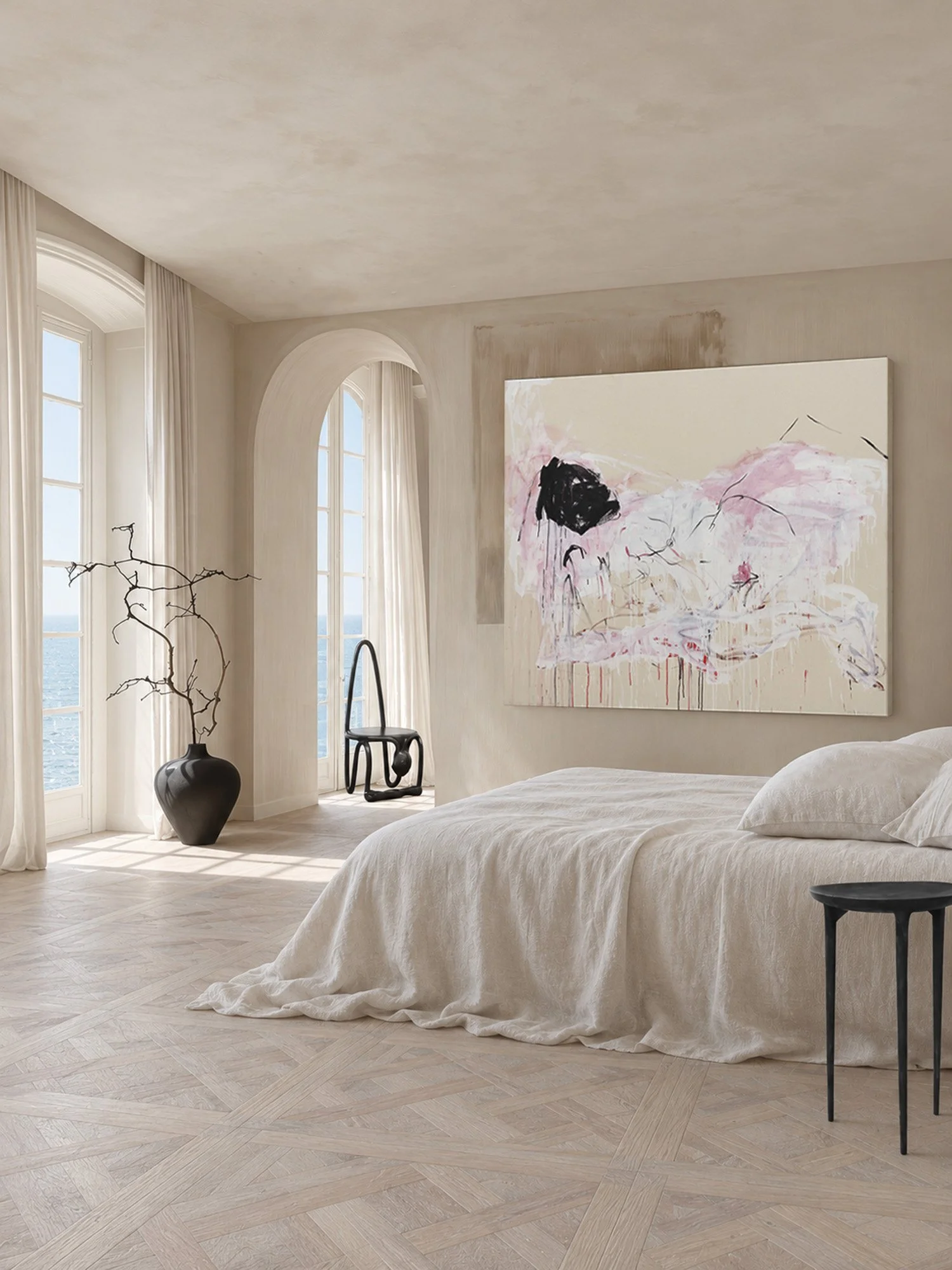
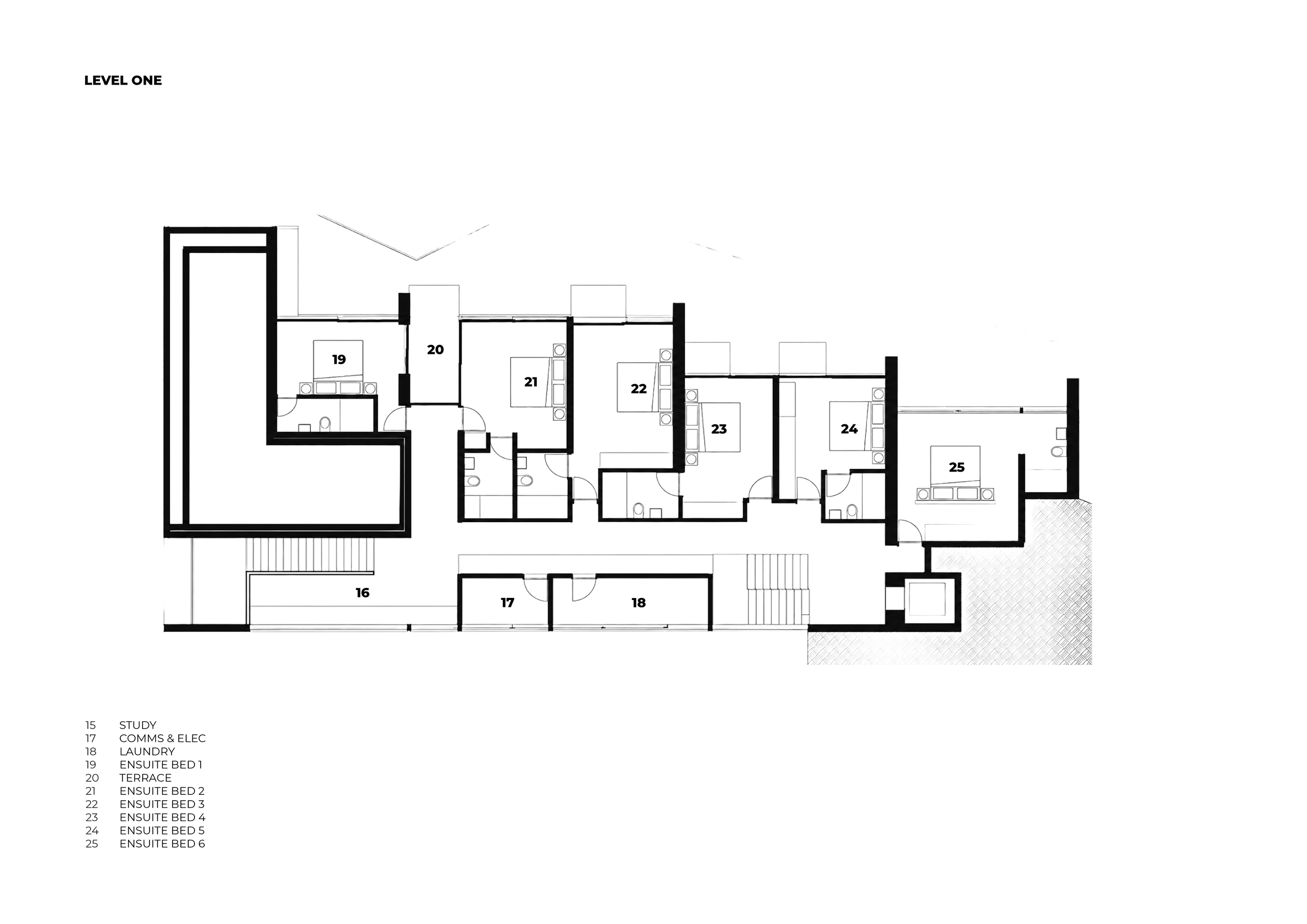
In the bedroom, the architectural language becomes quieter. Pale patterned timber floors, softly draped linen and warm plaster surfaces establish an atmosphere of considerable restraint. Tall arched French doors frame the ocean beyond, while a large abstract painting introduces subtle passages of pink, black and white against the otherwise muted surroundings. Dark sculptural furnishings provide moments of contrast, their individual forms given room to breathe within the generous composition. The effect is contemplative without becoming austere, with natural light and the movement of the sea lending the space much of its character.
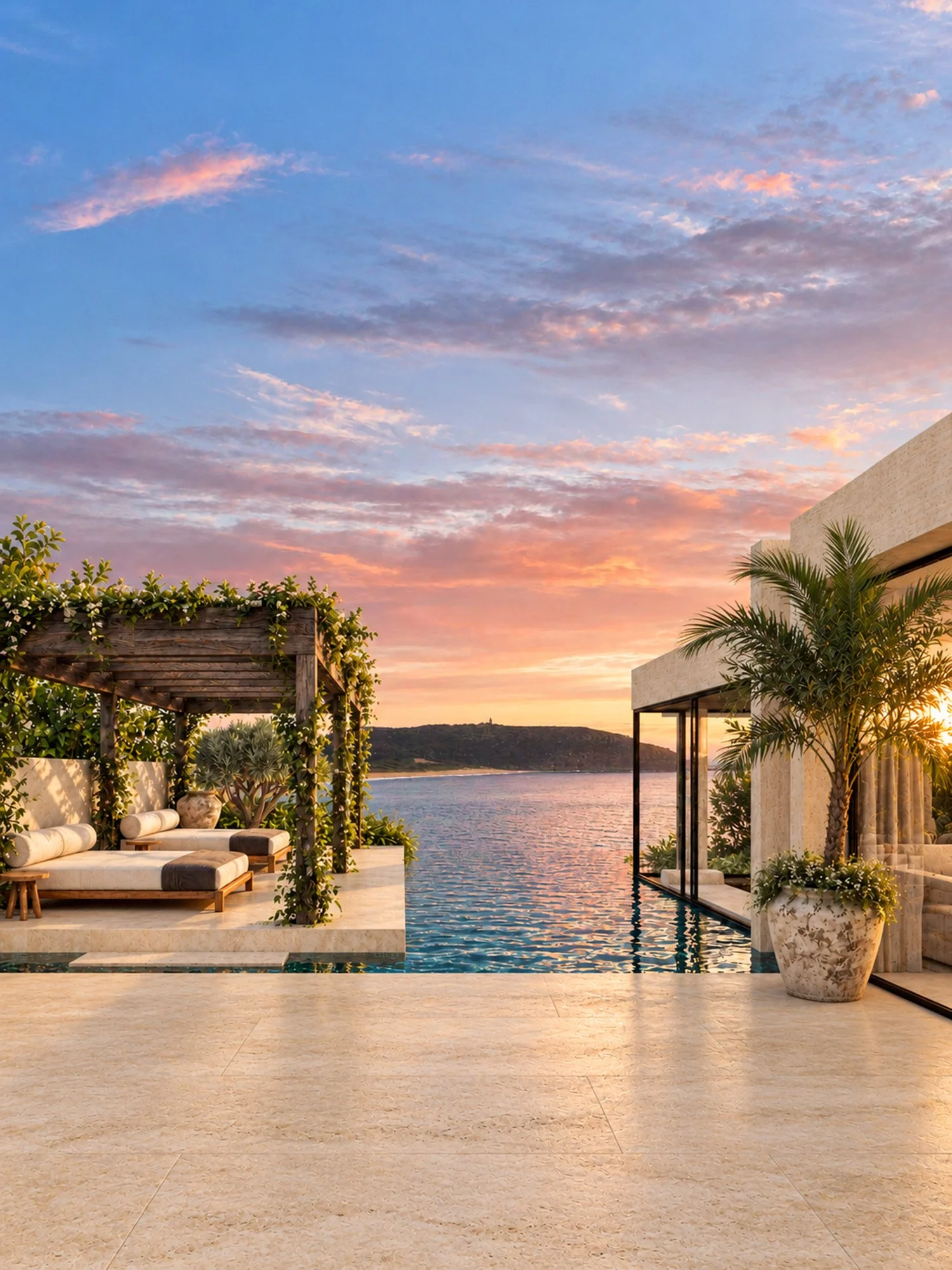
Outside, the architecture gives way to a more distinctly Australian expression of luxury. An expansive travertine terrace meets an infinity-edge swimming pool, its surface appearing to dissolve into the ocean beyond. A timber pergola, softened by climbing greenery, shelters generously upholstered daybeds by James Perse, while tropical planting introduces a more informal character to the rigorously composed architecture. Here, the distinction between a private residence and a coastal retreat becomes increasingly difficult to define.
Throughout Palm Beach, there is a deliberate tension between architectural formality and the freedom associated with its setting. European references lend the interiors a sense of history and proportion, while contemporary art, sculptural furniture and relaxed materials prevent them from becoming overly ceremonial. The surrounding landscape provides the final counterpoint, introducing an openness and informality that could belong only to this particular stretch of the Australian coast.
The result is a residence that draws much of its character from these contrasting influences, where the familiarity of historical architecture meets the generosity of contemporary coastal living, and the experience of the home remains inseparable from the extraordinary landscape beyond.
Photographs — Brent Lee mixed-media images