About
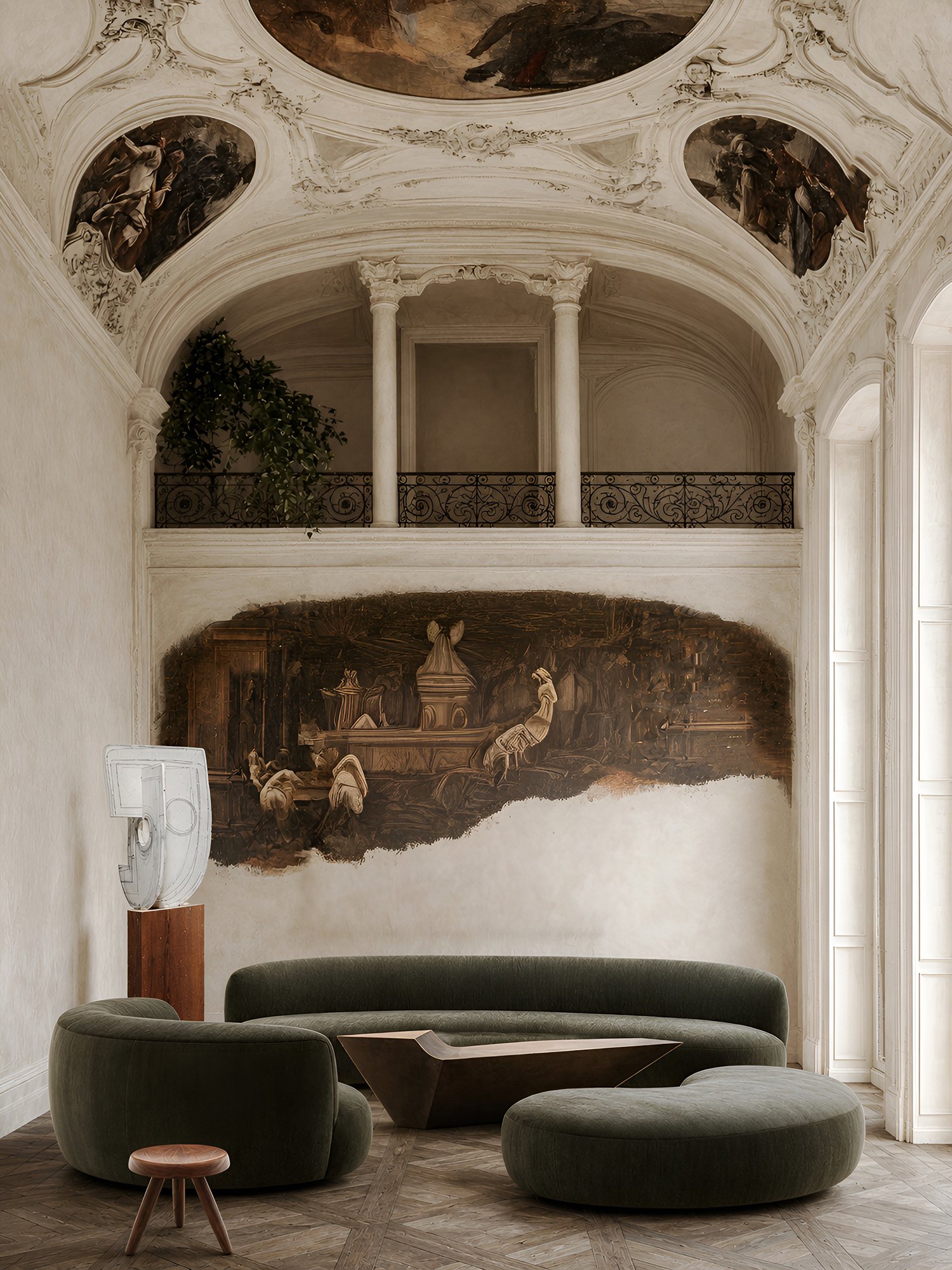
Brent Lee, born 1988, is an Australian designer working across residential interiors and collectible design. His practice draws on a broad architectural history, from the monumentality of Roman architecture and the measured proportions of 18th-century French neoclassicism to the restraint associated with Belgian minimalism. These influences are less a prescribed aesthetic than a way of understanding space, material and the enduring relationship between architecture and the objects within it.
Having studied fashion design in Melbourne before architecture in Sydney, Lee developed an approach attentive to both overall composition and individual detail. Art and sculpture occupy a central position in this thinking. Rather than treating artworks as decorative additions, he considers their relationship to the architecture itself, at times reinforcing its order and at others introducing a deliberate tension between historical reference and contemporary expression. His collectible design follows a similar line of inquiry, exploring mass, proportion and the increasingly fluid boundaries between functional objects and sculpture. That perspective also informs Studio Lowsheen, the independent editorial platform he founded in 2017, which examines architecture, art and objects across centuries and cultures.
His residential work ranges from private homes in Los Angeles to multi-residential developments in Australia and the ongoing transformation of a 19th-century villa in Adelaide. Although the design direction remains singularly authored, each project draws upon a wider circle of specialist expertise. Working alongside heritage architects, artisans, art dealers and advisors, fabricators and construction teams, Lee brings together the disciplines required to translate an architectural concept into a considered, fully realized environment.
This approach extends into his collectible design practice, represented exclusively by New York gallery STUDIOTWENTYSEVEN, with works fabricated through Ateliers Saint-Jacques in France. The emphasis on craftsmanship and material integrity extends across both his interiors and sculptural objects.
Yet for all its historical references and sculptural ambitions, the work remains closely concerned with domestic life. Architectural character is balanced against the presence of personal collections, the intimacy of individual rooms and the daily rhythms of those who inhabit them. The intention is not simply to establish a recognizable aesthetic, but to develop interiors with the depth and flexibility to accommodate lives as individual as the architecture itself.