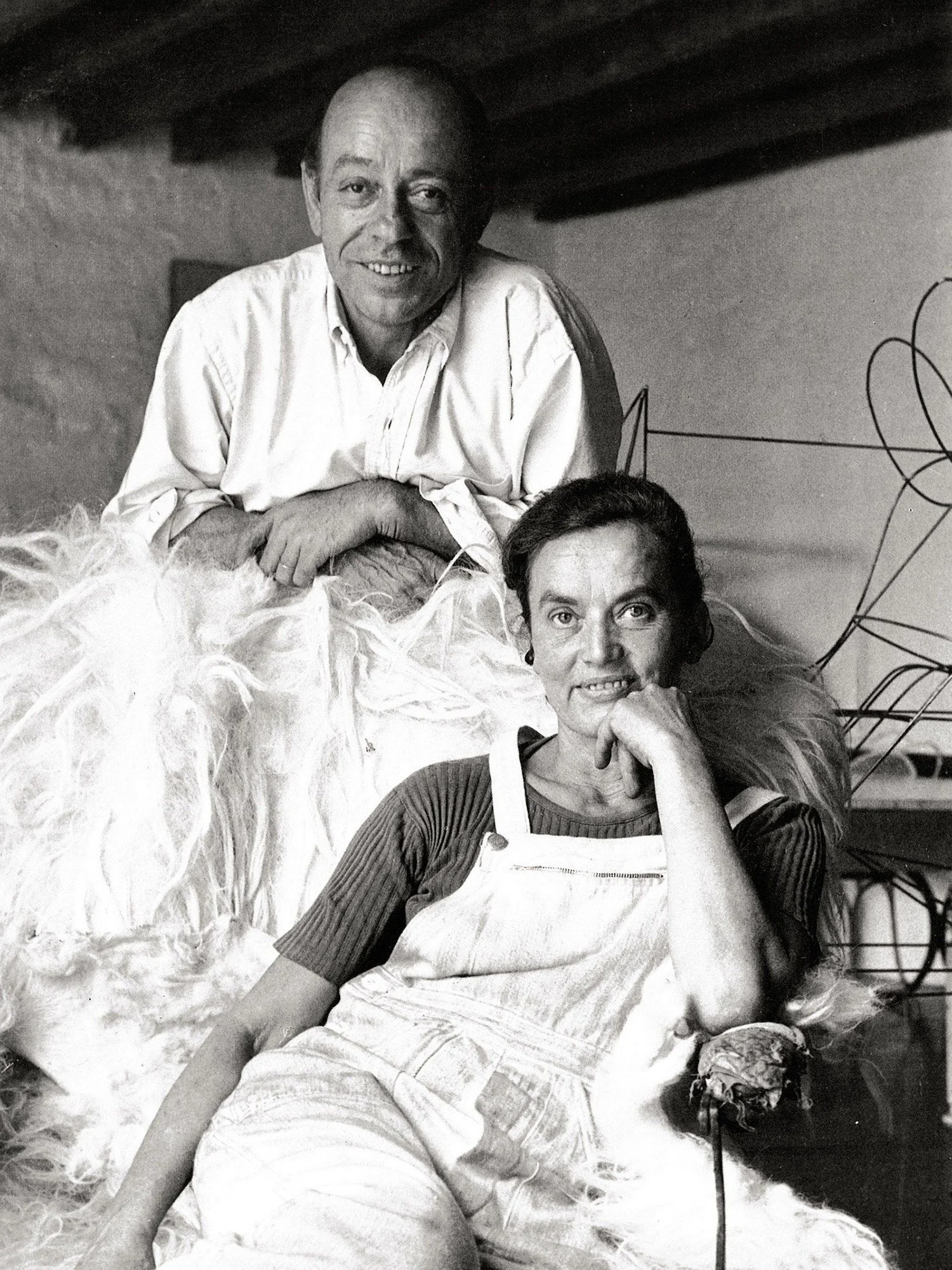
François-Xavier Lalanne (1927–2008) and Claude Lalanne (1924–2019)
Photo – Édouard Boubat, 1974
François-Xavier Lalanne
Featured Artist
François-Xavier Lalanne (1927–2008) was a French sculptor whose animal forms brought humor, fantasy, and practical purpose into everyday life. Born in Agen, he grew up with a grandfather who imported cattle bones and painted reproductions of museum masterpieces, and a father whose enthusiasm for cars extended to the presidency of the Agen Automobile Club. Following a Jesuit education in Évreux, Normandy, where he studied ancient Greek and Latin, Lalanne moved to Paris in 1945 to attend the Académie Julian. There, he studied sculpture under Marcel Gimond, a former pupil of Aristide Maillol and friend of Auguste Rodin. Although he won the academy’s painting prize in 1948 and initially regarded himself as a painter, an interest in monumental sculpture was already emerging. Working as a guard at the Louvre in 1949, he found lasting references in its Egyptian and Assyrian collections. That same year, he established a studio on the impasse Ronsin, an artistic enclave whose history encompassed Redon and Noguchi, and whose wider milieu included Constantin Brancusi, Max Ernst, Marcel Duchamp, Niki de Saint Phalle, and Jean Tinguely.
Lalanne met Claude Dupeux, his future wife and artistic partner, at his first painting exhibition at Galerie Cimaise in 1952. She subsequently joined him in his Montparnasse studio, where their acquaintance with James Metcalf introduced them to galvanoplasty, an electrochemical metalworking process that expanded their sculptural possibilities. Their first joint exhibition, Zoophites, opened at Galerie J in 1964 through the support of Jeanine Goldschmidt, wife of the critic Pierre Restany. François-Xavier’s Rhinocrétaire encapsulated his approach: a rhinoceros constructed from sheet brass concealed a desk, lamp, wine storage, and safe, recalling the hidden mechanisms of eighteenth-century furniture. His Moutons, introduced in 1965, brought a similarly playful challenge to bourgeois convention, offering collectors functional seating in the form of sculptural sheep. Acquired by figures including the Rothschilds, Gianni Agnelli, and Peter Marino, and exhibited through Alexandre Iolas, these works helped establish his reputation. For Lalanne, sculpture belonged within the familiar rituals of living: sitting, dining, writing, and storing became opportunities to encounter art with ease and humor.
In 1967, François-Xavier and Claude settled in Ury, where their home and studios became the enduring center of their work. Dinners brought together artists, designers, collectors, and aristocrats, including Andy Warhol, Karl Lagerfeld, the Rothschilds, the David-Weills, and members of the Greek and Bourbon royal families. Their close relationship with Yves Saint Laurent and Pierre Bergé found expression in the collectors’ apartment on the rue de Babylone, which housed several Lalanne works. Among them was François-Xavier’s YSL Bar, made in nickel silver and brass in 1965 and later sold at Christie’s in 2009. Bergé regarded the Lalannes as poets, a description that captures the imaginative freedom underpinning their craftsmanship. François-Xavier’s bestiary gave familiar interiors an unexpected population, combining sculptural discipline with the pleasure of living among extraordinary creatures.
-
2024
Planète Lalanne | Venice, Italy2022
Les Lalanne: Makers of Dreams | Ben Brown Fine Arts (London, U.K.)2021
Claude & François-Xavier Lalanne: Nature Transformed | Sterling and Francine Clark Art Institute (Williamstown, MA)
Lalanne à Trianon | Palace of Versailles (Versailles, France)2010
Les Lalanne | Musée des Arts Décoratifs (Paris, France)1998
Château de Bagatelle | Paris, France1991
Château de Chenonceau | Loire Valley, France1976
Whitechapel Art Gallery | London, U.K.1967
Art Institute of Chicago | Chicago, IL1966
Alexandre Iolas Gallery | Paris, France1965
Salon des Jeunes Artistes | Paris, France1964
Zoophites | Galerie J (Paris, France)1953
Galerie Cimaise | Paris, France
Featured Artworks by François-Xavier Lalanne
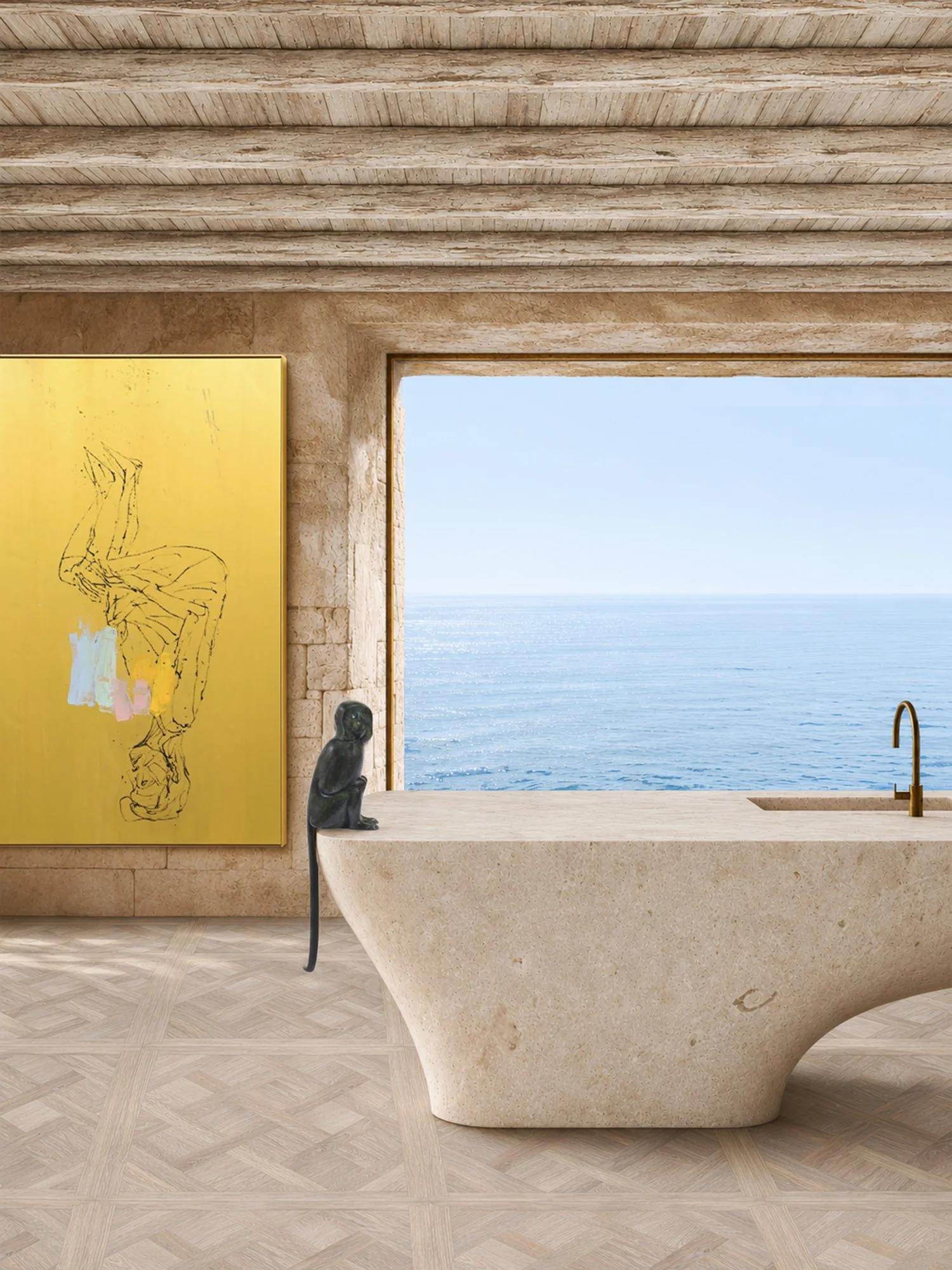
François-Xavier Lalanne
Attentive Monkey II
1999