CJ House
Byron Bay, Australia
2025 — Present
Residential
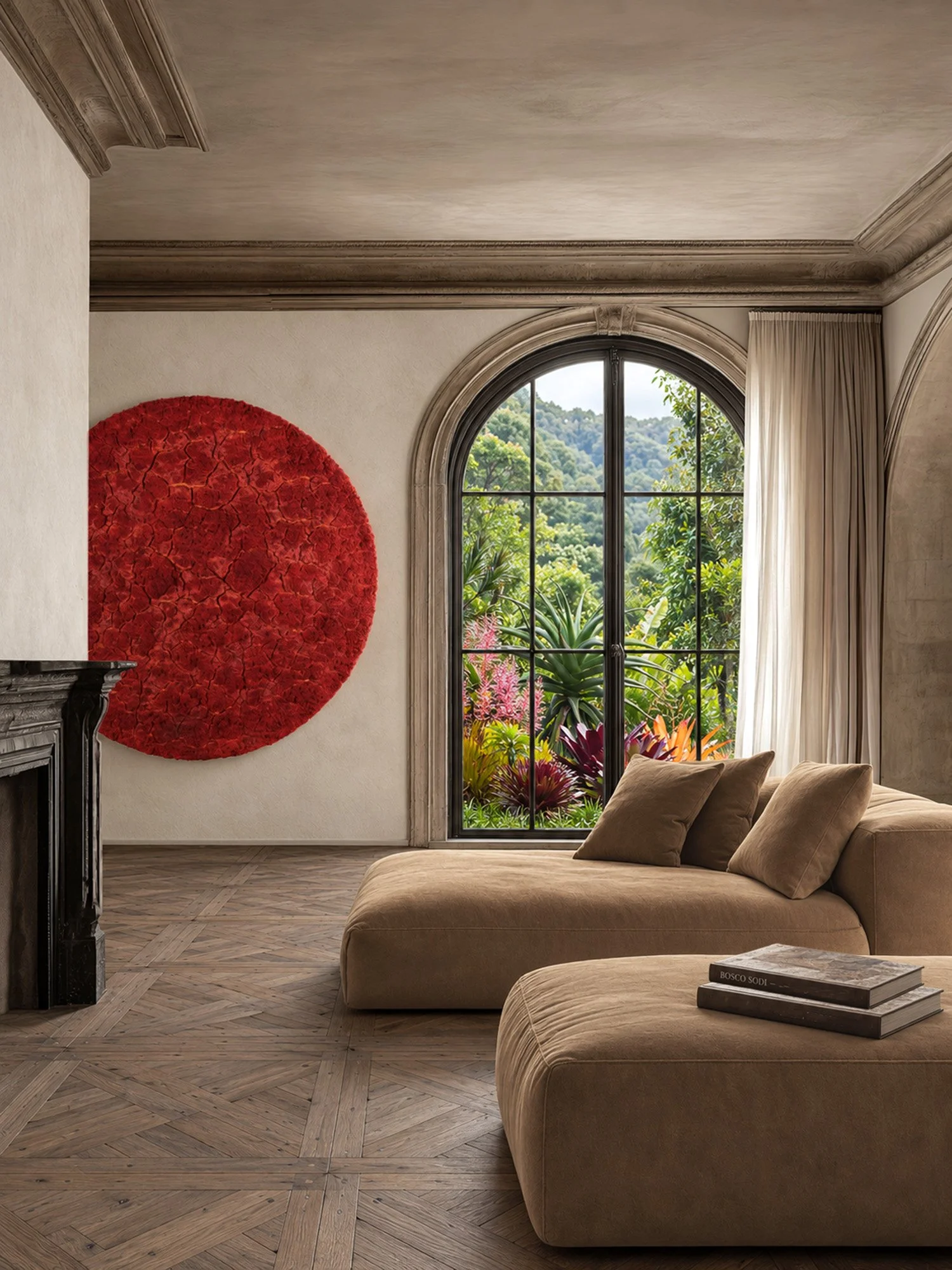
There is something unexpected about encountering this particular kind of architectural formality in the Byron Bay hinterland. Beyond the tall, arched windows, tropical gardens give way to densely forested hills. Inside, however, the references shift to Europe: sculpted plaster vaults, ornamental cornices and aged timber parquet establish a distinctly different sense of place. Rather than attempting to reconcile these contrasting influences, CJ House makes their differences central to its architectural character.
In the living room, deeply molded cornices, a carved lava stone fireplace and intricately patterned parquet establish a sense of historical permanence. Tall arched openings draw the surrounding landscape into the composition, while generously proportioned, low-slung seating introduces a more relaxed domestic character. Against this measured backdrop, Bosco Sodi’s Untitled (2012), a nearly two-meter-wide circular work of intensely textured red pigment, makes a striking intervention. Its cracked, irregular surface provides a raw counterpoint to the architectural refinement, while finding an unexpected visual correspondence with the vivid tropical planting beyond the windows.
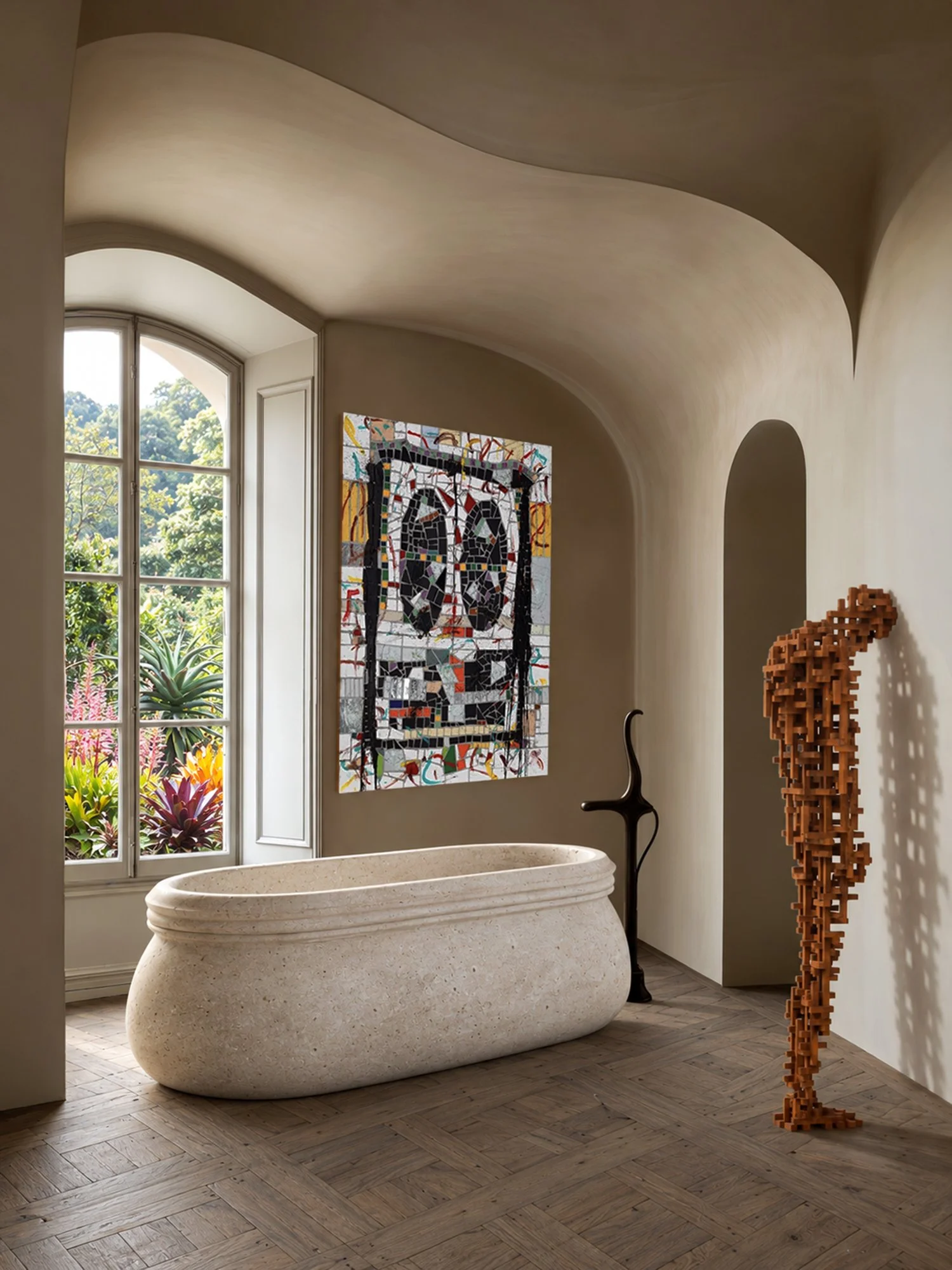
The relationship between art and architecture becomes more intimate in the bathroom. An undulating plaster vault gives the space an almost sculptural quality, its continuous curves contrasting with the geometric rhythm of the timber flooring below. A freestanding limestone bathtub occupies the center of the composition, beneath Rashid Johnson’s Untitled Broken Men (2019), a fragmented arrangement of ceramic and mirrored tiles, painterly marks and expressive human forms. Nearby, Antony Gormley’s Test: Butt (2021), a cast-iron figure inclined toward the wall, introduces another distinctly human presence. Its open, geometric construction and the shadows it casts create an intriguing tension with the softness of the surrounding plasterwork.
Although the architectural language is formal, the interiors are far from austere. Natural light moves across textured surfaces, warm timber tempers the pale plaster and stone, and the tropical landscape remains a constant presence. The artworks, meanwhile, are not simply decorative additions but integral to how each room is experienced, shifting the relationship between domestic intimacy and the more contemplative atmosphere of a gallery.
Rather than interpreting Byron Bay through the familiar language of coastal design, CJ House proposes something less predictable. European architectural tradition provides the framework, contemporary art introduces a different physical and psychological dimension, and the exuberant Australian landscape continually challenges the formality within. Their coexistence, rather than any attempt at perfect harmony, gives the project its particular character.
Photographs — Brent Lee mixed-media images